KADAX 12 Liter Garden Spreader Review
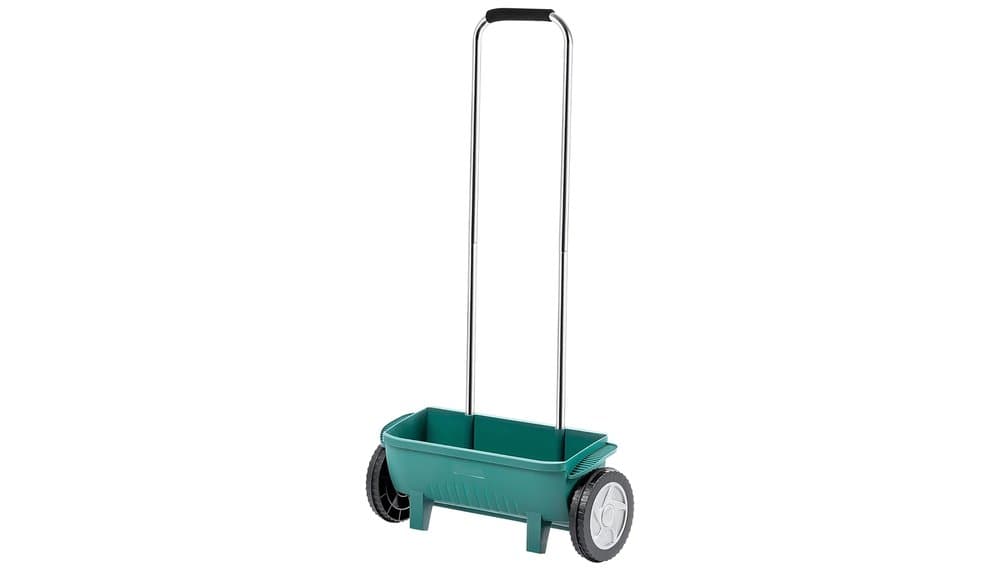
KADAX 12 Liter Garden Spreader
Introduction
On a site dedicated to garden maintenance, we often talk about lawnmowers, but the art of a beautiful lawn relies just as much on proper care. Fertilizing, seeding, amending: delicate operations where the uniformity of spreading is crucial. The KADAX 12 Litre Spreader Épandeur à Engrais presents itself as a manual tool to master these tasks. We will dissect this non-motorized accessory here, relying on its technical specifications and feedback from those who have used it. Can it become a reliable ally for caring for your lawn, from a small yard to a more substantial piece of land?
See also: Fiskars Solid Spreader Garden Tool Review · Greenstar Compact Manual Spreader Review
Strengths and Weaknesses
Before diving into the details, here is a summary of the strengths and limitations of the KADAX 12 Litre Spreader, based on the analysis of the manufacturer's promises and field feedback.
What we like
- Versatility of use: A single tool for spreading granular fertilizer, seeds, lime, and even de-icing salt.
- Generous capacity: A 12-liter tank allows for covering a significant area without constantly having to refill it.
- Adjustable dosage: The ability to adjust the flow rate is a major advantage to avoid overdosing and manage different types of granules.
- Robust construction: The materials advertised as weather-resistant and the presence of wheels are positive points for longevity.
Points to watch out for
- Setting precision: According to user feedback, the flow rate adjustment system can lack finesse and clarity, making it difficult to achieve perfect dosage.
- Non-uniform side spreading: Several testers point out that distribution can be uneven on the sides, requiring carefully overlapping passes.
- Comfort when empty: Although light when empty, its 12-liter volume, once filled with a dense product (fertilizer, salt), can make it heavy to push on rough terrain.
- Tedious cleaning: The design with many nooks and crannies can complicate cleaning after use, especially with damp fertilizers.
Detailed Analysis of the KADAX 12 Litre Spreader
For a lawn care tool, effectiveness is judged on its precision, ergonomics, and adaptability to the gardener's real needs.
Versatility for year-round maintenance
The main argument for the KADAX is its advertised versatility. On paper, it covers spring needs (seeding, fertilizing), summer needs (maintenance fertilizer), autumn needs (lime), and winter needs (salt). This promise is appealing to the user who wants to limit their tool purchases. However, the community notes an important warning: extremely rigorous cleaning is mandatory between each type of product, at the risk of contamination. Using the same spreader for corrosive salt and then for delicate seeds requires a cleaning discipline that not all users have.
See today's priceCapacity and ergonomics: for which areas?
A 12-liter capacity is a real asset. For a standard fertilizer, this can correspond to several hundred square meters in a single load, making it relevant for medium to large plots (beyond 500m²). For very large areas (several thousand square meters), muscle fatigue due to the weight of the loaded device can become a limiting factor; a tow-behind spreader then becomes more suitable. The ergonomics touted by the manufacturer, with its practical handle and "soft wheels," is generally validated by users for use on flat, well-maintained ground (mown lawn, driveway). On the other hand, on soft, bumpy ground or in tall grass, the required effort increases noticeably. The wheels, while practical, are not all-terrain wheels.
The spreading system and dosage adjustment: the key to success
Unlike a lawnmower, there is no cutting system, but a spreading mechanism via a horizontal rotating disk, activated by a crank. The quality of the result depends entirely on the regularity of rotation and the opening of the dosage gate. It is on this last point that opinions differ. The presence of a dosage adjustment is in itself a good thing, but testers point out that the adjustment scale is not always intuitive or precise. To achieve uniform application, it is often necessary to do tests on a neutral surface (like a driveway) before starting on the lawn. The optimal opening varies enormously depending on the product's granularity (fine seeds vs. coarse fertilizer).
Robustness and maintenance: an investment over time
Weather-resistant materials are a crucial point for a tool meant to stay in a garage or garden shed. The community reports that the plastic structure withstands moderate shocks well, but that some moving parts (like the adjustment lever or the wheel axle) could be long-term weak points. As mentioned, maintenance is demanding: after each use, thorough rinsing and drying are necessary to avoid corrosion and clogging of the mechanisms by fertilizer or salt residue.
Summary Technical Data Sheet
| Characteristic | KADAX 12 Litre Spreader Specifics |
|---|---|
| Tool type | Manual wheeled spreader with rotating disk |
| Tank volume | 12 liters |
| Main uses | Spreading granular fertilizer, grass seeds, lime, de-icing salt |
| Distribution system | Adjustable gate opening + horizontal rotating disk activated by crank |
| Mobility | 2 wheels, push/pull handle |
| Materials | Weather-resistant plastic, metal for axles and mechanisms |
| Strengths (specifications) | Large capacity, advertised versatility, flow rate adjustment, presence of wheels |
| Points to watch | Weight when loaded, dosage setting requires calibration, side spreading sometimes uneven |
What Users and Testers Say
The synthesis of customer reviews and available online expert feedback shows a consensus around several points.
The recurring positive points are:
- The price-quality ratio is often judged good for occasional or seasonal use.
- The 12-liter capacity is appreciated because it limits trips to refill.
- It does the basic job: it allows spreading granular products much more evenly than by hand.
- Its ease of storage due to its moderate size is a plus.
The frequently reported criticisms and problems are:
- Uneven spreading: This is the number one complaint. Many users notice streaks (green or brown lines) on their lawn after fertilizing, proof of uneven spreading at the edges of the area covered by the disk.
- Lack of adjustment precision: The adjustment scale is described as unreliable. You have to find the right setting "by eye" and through trial and error, which wastes product.
- Clogging issues: With slightly damp fertilizers or fine seeds, the discharge orifice tends to clog, requiring stops to clear it.
- Imperfect solidity: Some report fragility in the gate opening mechanism or the handle attachment after several uses.
Conclusion: Who is the KADAX 12 Litre Spreader for?
In conclusion, the KADAX 12 Litre Spreader Épandeur à Engrais is not a professional precision tool, but it represents a functional entry-level solution for the amateur gardener.
It will be particularly suitable for those who:
- Have a medium-sized plot (up to about 1000 m²) and do not wish to invest in expensive motorized equipment.
- Seek above all versatility and have the necessary rigor to clean it perfectly between each type of product.
- Accept spending a little time calibrating the setting and adopting an overlapping spreading technique to compensate for lateral irregularity.
On the other hand, it will be less suitable for:
- Owners of very large areas for whom the weight and manual effort will become limiting.
- Perfectionists demanding a perfectly homogeneous distribution without streaks, who should look towards high-end broadcast or centrifugal spreaders.
- Users looking for absolute ease of use and bulletproof durability.
Ultimately, the KADAX fulfills its basic contract: advantageously replacing manual spreading. However, it requires a certain know-how and patience from the user to achieve an optimal result. For routine lawn maintenance on a reasonably sized plot, it constitutes a relevant purchase, provided one knows and accepts its limitations.
100% free and independent — All our articles are written independently, without any sponsorship. We may earn a commission on purchases made through our links, at no extra cost to you.
Articles you might like
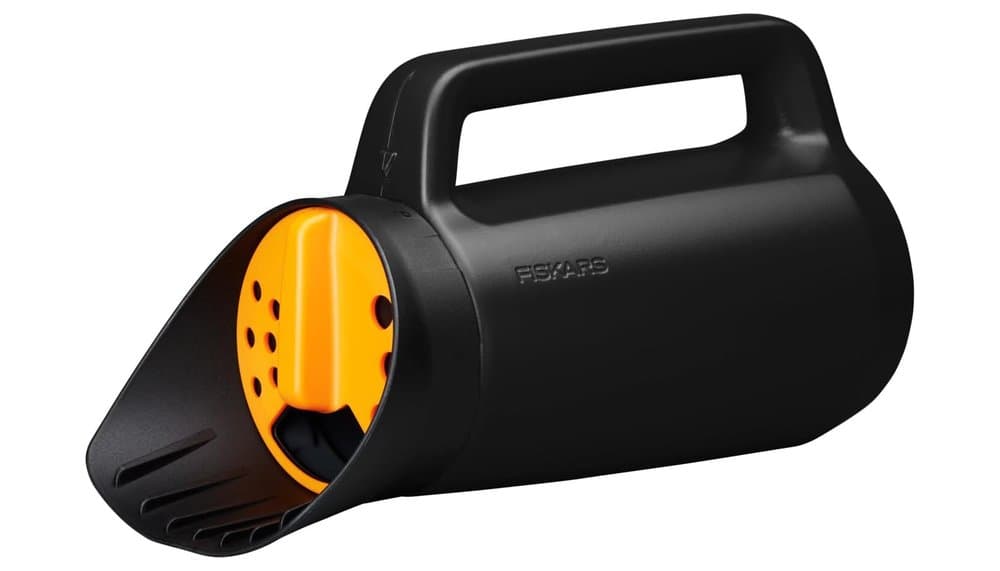
Fiskars Solid Spreader Garden Tool Review
A precision tool for targeted lawn maintenance, ideal for small tasks like reseeding patches or spreading sand on garden paths.
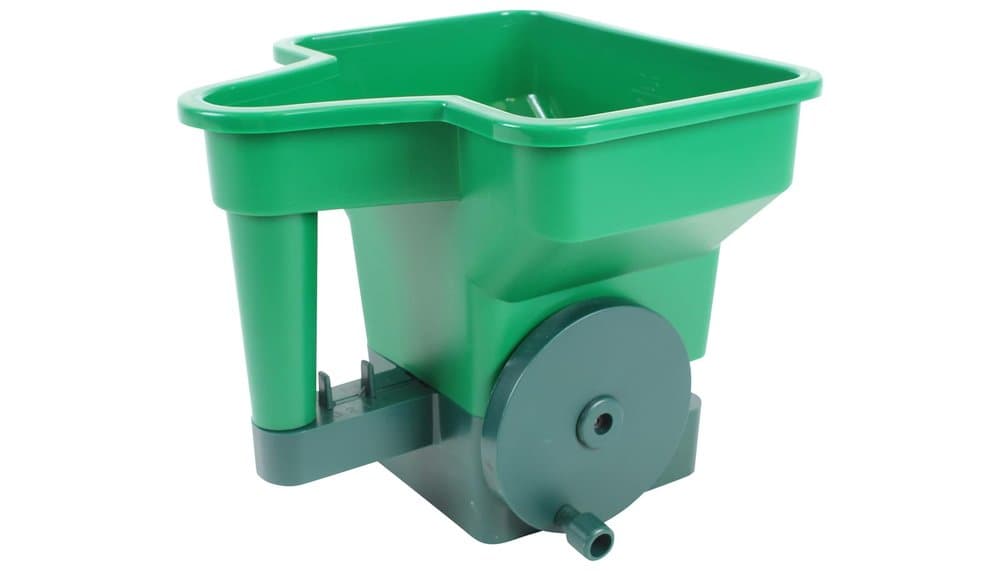
Greenstar Compact Manual Spreader Review
Greenstar Compact Manual Spreader review: a precision tool for fertilizing and seeding small to medium lawns manually.
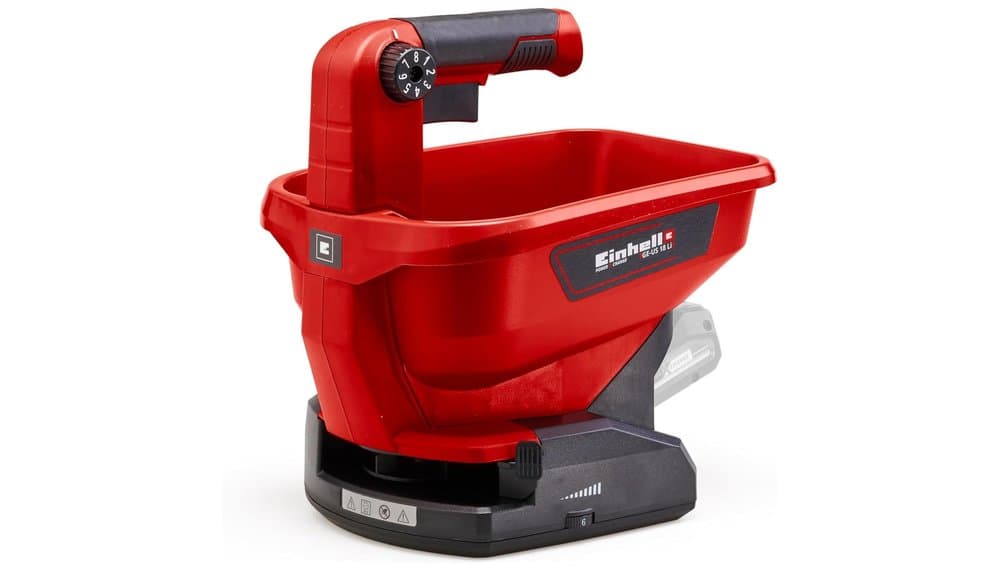
Einhell Power X-Change Universal Spreader Review
Einhell's cordless universal spreader ensures even lawn distribution of fertilizer, seeds, or salt, eliminating manual effort for uniform results.