Buying Guide: Choosing Your Thermal Brushcutter
You have sloped land or a garden that brambles are gradually invading, and a simple lawnmower is no longer enough. So yes, you need to think about a thermal brushcutter. But when faced with choosing engines, power, and accessories, you can quickly feel lost. Don't worry, we're going to unravel all of that together so you find the tool that will truly make your life easier.
Key Points to Remember
- The choice between a 2-stroke engine (lightweight, occasional use) and a 4-stroke engine (durable, regular use) depends on the frequency and duration of your work.
- Comfort in use depends mainly on a good balance between cylinder capacity, weight, and a quality backpack harness.
- Select the cutting head according to your terrain: nylon line for grass and hidden obstacles, metal blade for dense and woody vegetation.
- Regular maintenance, particularly proper winterization without old fuel, is essential for the longevity of your machine.
- A budget of €200 to €400 offers the best value for money for amateur use, without forgetting to invest in a complete set of protective equipment.
2-Stroke or 4-Stroke Engine: Which Choice for Your Use?
This is often the first question to ask, as it defines the entire user experience. Frankly, there is no universal answer, only the choice that best suits your work frequency and tolerance for maintenance. Let's clear things up.
The 2-Stroke Engine, the King of Simplicity (and Responsiveness)
It's the most common among private users, and for good reasons. It is lighter, mechanically simpler, and generally offers a better power-to-weight ratio. You'll recognize it by the gas/oil mixture you have to prepare yourself. For example, for a standard model, you will mix 1 liter of SP95 or SP98 gasoline with 40 ml of specific 2-stroke oil (usually in a 1:25 ratio). This engine is less forgiving of mistakes: a bad mixture, too low on oil, and engine failure is guaranteed in the medium term. But if you maintain it well, it's indestructible. Perfect for intense but occasional work sessions, like clearing your embankment once a month in spring and summer. Its characteristic sound and exhaust smoke are part of the landscape, but it's not the most discreet for the neighbors.
The 4-Stroke Engine, the Sober and Enduring Option
Here, no mixing. Gasoline goes in the tank, engine oil goes in its crankcase, just like in your car. The advantages are tangible: it is more fuel-efficient, quieter, and its emissions are less odorous and polluting. On the downside, it is consistently heavier and more expensive to purchase. It excels in long and regular uses. Imagine yourself maintaining several large plots throughout the season, or owning a property with thick hedges to trim frequently with an attachment. That's where the 4-stroke shows its value.
A Little Table for Clarity
To summarize, here is how they compare:
| Criterion | 2-Stroke Engine | 4-Stroke Engine |
|---|---|---|
| Fuel | Gas/oil mixture (e.g., 1:25) | Pure gasoline + oil in crankcase |
| Weight | Lighter (gain of 1 to 2 kg often) | Heavier |
| Ideal Use | Occasional, intensive work | Long, regular work |
| Noise Level | Louder | Quieter |
| Budget | Generally more affordable | More expensive to purchase |
My friendly advice? For the vast majority of amateur gardeners with a plot to maintain a few weekends a month, the 2-stroke is the simplest and most economical solution. You just have to be rigorous about preparing the mixture. Opt for a 4-stroke if you know you will use it very often, and if weight is not your primary rejection criterion. In both cases, fuel quality is paramount: always use ethanol-free gasoline (SP98-E5 or better, a specific fuel like Alkylate) to preserve the carburetor and avoid gummy deposits. It's an extra cost, but one that will save you a lot of tedious disassembly and cleaning.
Displacement, Weight, and Ergonomics: The Comfort Triad
You've chosen your engine type? Perfect. Now, you need to find the right balance between the tool's strength and your own ability to handle it without wearing yourself out in ten minutes. This is where the displacement-weight-ergonomics trio comes into play. And believe me, it's just as important as raw power.
Displacement is the Engine's Breathing Capacity
Expressed in cubic centimeters (cm³), it gives a good idea of the available force. A small displacement, let's say between 20 and 25 cm³, is suitable for tall grass and light work on small areas. It's the right choice for a regular garden that just needs a little freshening up on its borders and easy slopes.
As soon as the task gets tougher, with young brambles or dense brush, you need to move up a level. A displacement of 28 to 33 cm³ is the safe bet, the real compromise for most rough terrain. It offers the necessary power reserve to avoid stalling at the first resistant clump. Beyond 40 cm³, you enter the realm of really robust machines, capable of tackling thick thickets and prolonged work. Unless you have truly wild land, this power is often oversized for a private individual.
Weight, the Invisible Enemy
Always look at the dry weight (without fuel). A 5 kg dry model will quickly become a device weighing 5.5 to 6 kg once the tank is full and the cutting tool is installed. The difference between a 6.5 kg machine and an 8.5 kg one is enormous in hand. It's not just 2 kilos, it's muscle fatigue that accumulates twice as fast, a shoulder that pulls, a back that stoops. For occasional use of less than an hour, you can tolerate a bit more weight. For longer sessions, aim for light.
Ergonomics: Where Real Comfort is Decided
This is the most underestimated, yet most crucial part. Three elements make the difference:
- The Harness. Forget the simple shoulder strap for any serious work. A well-designed backpack harness, with wide, padded straps, changes everything. It distributes the weight across your hips and shoulders, not just on one shoulder. Some high-end models even incorporate spring systems that absorb vibrations and the tool's movement. Try it in the store with the machine attached, feel the balance.
- Weight Distribution. A well-balanced machine feels lighter than it is. The center of gravity should be close to your body. A brush cutter where the engine is too far forward will be exhausting to control.
- The Controls. The throttle and emergency stop buttons must be accessible without letting go of the handle. A safety lever that can be operated naturally with the hand holding the handle is a real plus for safety and fluidity.
My opinion? Never sacrifice ergonomics and weight on the altar of a large displacement. A well-balanced 30 cm³ machine carried comfortably will be a hundred times more effective and pleasant than a 40 cm³ monster that you drag around like a ball and chain. Always ask yourself: "Could I carry and use this for an hour and a half without hating my life?" If the answer is no, move on.
Our Selection
In the world of thermal brushcutters, the choice can be vast. We have analyzed three professional models for you, based on their technical specifications and user feedback, to help you see things more clearly. These machines, designed for demanding work, share common characteristics but also present notable differences in terms of power, comfort, and usage.
| Product | Displacement / Power | Weight | Key Strengths | Points to Consider (according to feedback) |
|---|---|---|---|---|
| Fuxtec FX-PS152 | 52 cm³ / 3 HP (2.2 kW) | ~8.5 kg | Anti-vibration system, Easy Starter | Assembly sometimes perceived as lengthy |
| AOSOME 2026 | 52 cm³ / 3 HP (2.2 kW) | ~7.8 kg | Full crankshaft engine, announced robustness | Less established brand, more limited reviews |
| Fuxtec FX-PS162 | 62 cm³ / 3.5 HP (2.6 kW) | ~8.6 kg | Maximum power, high torque | Stronger pressure on the hands over the long term |
Fuxtec FX-PS152
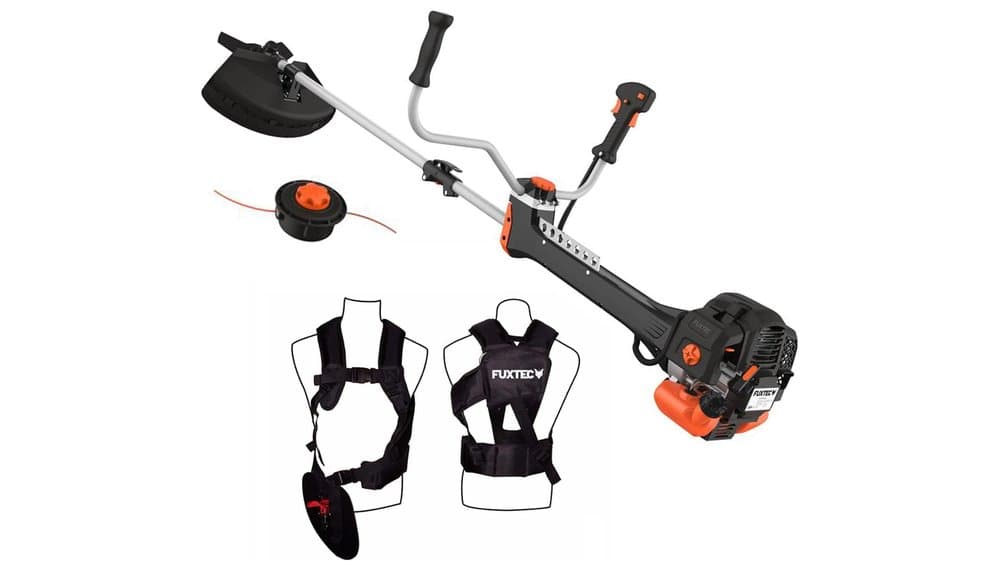
With its 52 cm³ 2-stroke engine developing 3 HP, the FX-PS152 positions itself as a versatile tool for the regular maintenance of large plots of land. According to the specifications, its main assets are its integrated anti-vibration system and its Easy Starter device, designed to reduce fatigue and facilitate starting, a point often crucial for users.
Feedback from the community generally confirms the effectiveness of the padded harness and the tool-free adjustable handle, which contribute to good comfort during prolonged sessions. The "2-in-1" design, with supplied line head and 3-tooth blade, is also appreciated for its versatility. The simplified maintenance (air filter and carburetor accessible without tools) is a plus noted by experienced DIYers.
However, not all feedback is unanimously positive. Some users point out that the initial assembly can be tedious and requires carefully following the instructions. Furthermore, although the anti-vibration system is present, some feedback mentions that for very long uses, the machine remains physically demanding, which is common in this category. In summary, this model seems to offer an excellent balance between power and user-focused features, despite an initial (assembly) setup that can be a barrier for some.
AOSOME 2026
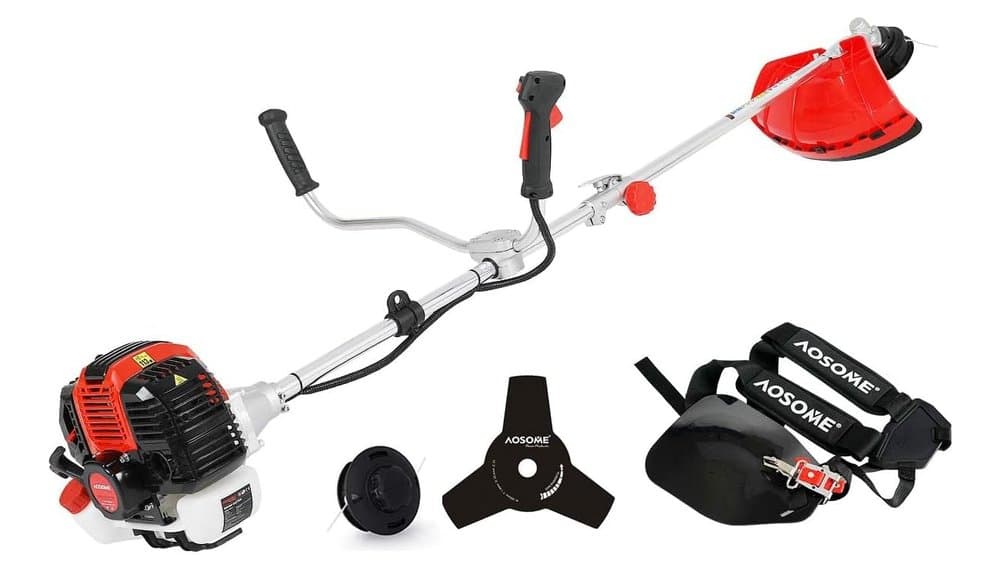
The AOSOME 2026 model shares similar technical characteristics with the Fuxtec FX-PS152: a 52 cm³ 3 HP engine. What distinguishes it on paper is its full crankshaft architecture. The manufacturer highlights that this design promises increased durability and reliability, as well as more stable operation, compared to the half-crankshaft engines often found in this range.
On paper, the specifications also announce a reduction in vibrations and easier starting thanks to a CDI ignition. Its slightly lower weight (7.8 kg) could be an advantage for maneuverability. Delivery includes both cutting heads (line and blade) and a harness, like its competitors.
Nevertheless, the analysis here is more reserved, mainly because user feedback is less numerous and the AOSOME brand seems less established on the market than Fuxtec. This lower visibility may raise questions for some regarding the long-term availability of spare parts, even though the manufacturer mentions their existence. The available reviews are generally very positive, but the community of testers is more limited. This model therefore presents solid technical arguments, but choosing it implies trust that is perhaps less supported by a broad history of feedback.
Fuxtec FX-PS162
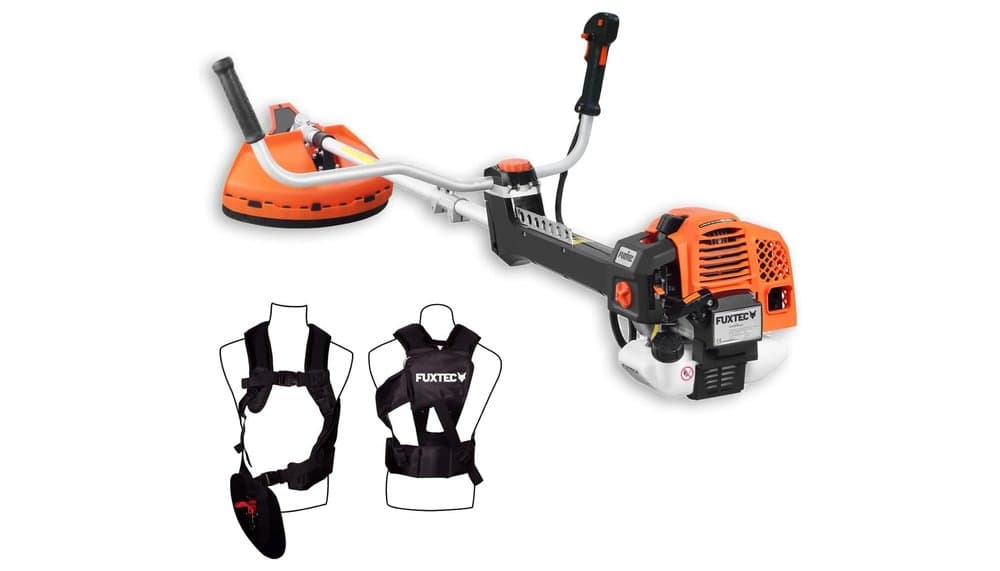
For the most demanding tasks, the FX-PS162 bets on raw power. Its 62 cm³ engine developing 3.5 HP gives it higher torque, ideal, according to the specs, for tackling dense vegetation, brambles, or small shrubs. It incorporates the flagship features of its little sister, the PS152: anti-vibration system, Easy Starter, comfortable harness, and simplified maintenance.
The user community validates this increased brushcutting capability. For those who have large overgrown plots or tough vegetation, this extra power is perceived as a decisive asset that allows for faster work with less strain on the engine.
However, this power has a downside. According to some feedback, the machine, although of similar weight on the scale, transmits more significant vibrations to the arms when using the blade on hard vegetation. The larger engine can also prove to be slightly more demanding on the gas/oil mixture. This model is therefore not necessarily the best option for finishing maintenance or grass trimming; it excels in its role as "brute force" but at the expense of a certain operator comfort for light tasks.
Nylon Line or Metal Blade: Which Cutting Head for Your Terrain?
This question is at the heart of your work's efficiency and safety. Choosing the wrong cutting tool is like trying to cut wood with a hacksaw: the result will be poor and you will exhaust yourself for nothing. Your choice depends on one single factor: the nature of what you need to cut.
Nylon Line: The Delicate All-Rounder
This is the basic tool, perfect for tall grass, young ferns, nettles, and still-thin brambles. Its greatest strength? Safety. In case of an impact against a stone or a stump, it snaps cleanly, limiting the risks of violent rebound (the famous "kickback") and protecting the machine. It is therefore the indispensable ally for terrain littered with obstacles hidden beneath the vegetation.
Don't forget the line diameter. A 2 mm or 2.4 mm line is sufficient for grass. As soon as you tackle tougher vegetation, switch to 2.7 mm or even 3 mm. The rotation speed of the head also plays a role: the higher it is, the more the line "whips" and cuts effectively.
But here is the real weak point: line advance. Bump-feed systems (tap the head on the ground) are convenient but can be finicky on soft ground. Semi-automatic systems (button on the head) require letting go of the handles. Frankly, for regular use, prioritize a machine with a reliable line advance system; it's a significant gain in time and nerves.
Metal Blades: The Brute Force, with Caution
Here, we move to the next level. A steel blade is made to cut what the line cannot handle: old, thick bramble patches, woody brush, young shrub shoots (like hazel or acacia). We generally distinguish between:
- Toothed blades (3 or 4 teeth): excellent for dense brush and fibrous vegetation. They "saw" more than they strike.
- Circular blades (with 24 or 40 teeth, or more): designed for the heaviest work and very hard vegetation. They require a powerful machine and extreme vigilance.
The warning is serious: a metal blade turns your brushcutter into a very aggressive cutting tool. Projections are violent and dangerous. Wearing full protective equipment (goggles, full-face visor, cut-resistant leg protection, thick gloves) is not a suggestion, it is an absolute obligation. Never use it on terrain where you don't know every stone and every root.
So, How to Decide?
Ask yourself this series of questions:
- Do I mainly see grass and non-woody green plants? → Nylon line.
- Is my terrain full of stones, old stumps, or hidden debris? → Nylon line, for your safety and that of the machine.
- Do I need to clear an old ditch overgrown with brambles as thick as my finger? → Metal blade (toothed blade).
- Is it a one-time heavy clearing job, or regular maintenance of rough terrain? For regular maintenance with a few dense areas, a heavy-duty line head may suffice. For pure clearing, the blade is essential.
One final piece of advice: if your budget allows, choose a machine that accepts both types of tools. Versatility comes at a price, but it offers a solution adapted to every corner of your land. You start with a blade for the rough work, and finish with line for a clean and safe result near fences.
Accessories and Systems That Make Life Easier
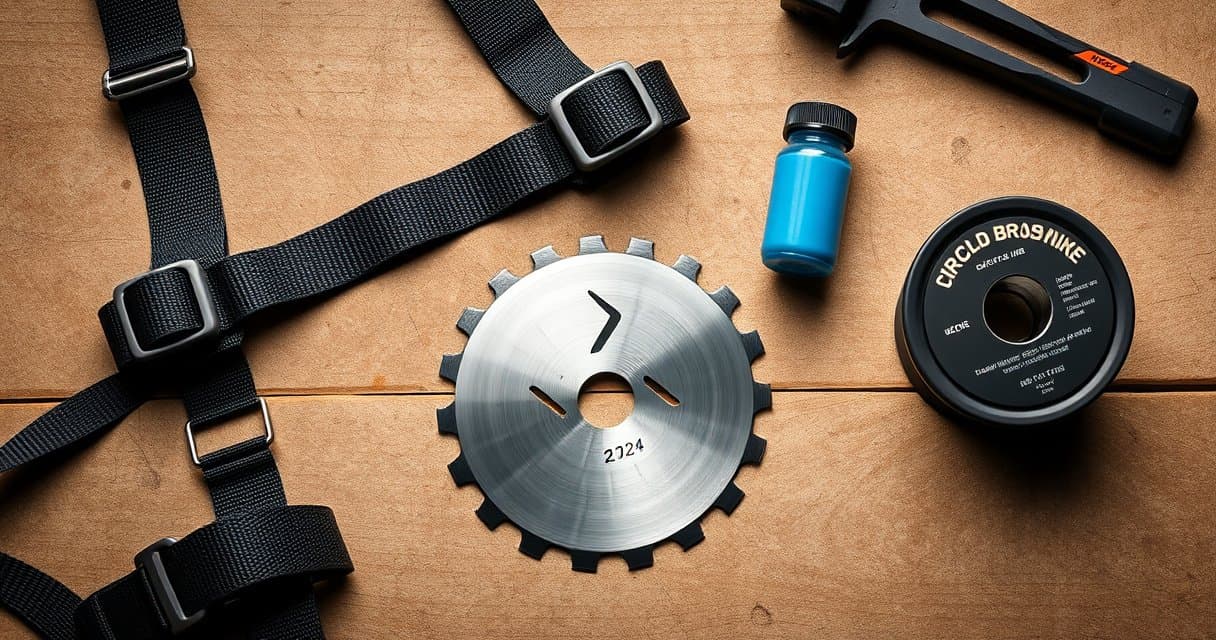
Once you've chosen the power unit and cutting head, it's the details that determine your daily comfort. These little "extras" don't sell a machine, but they make all the difference between a tool you're happy to take out and one that stays in the garage because it's too difficult to use. Focus on these elements.
The Harness: Your Best Ally Against Fatigue
Don't see it as just an optional accessory, but as the central piece of your equipment. A good harness literally transforms the experience. Avoid simple plastic straps and look for a back harness with a padded lumbar belt and wide, adjustable shoulder straps.
The ideal? Models with a ball-joint suspension system that allows the machine to pivot freely around you. You change direction with a simple wrist movement, without having to twist your torso or strain your shoulders. For a two-hour session on rough terrain, this can spare you two days of aches. Honestly, if the salesperson offers you a basic standard harness, don't hesitate to invest in a higher-end model. It's the best investment after the machine itself.
Start-Up and Usage Aids
Nothing is more discouraging than pulling twenty times on a starter cord only to see the engine sputter. Fortunately, solutions exist:
- The Anti-Rebound System (or decoupler): This is a shock absorber placed between the engine and the cord. It absorbs the engine compression during starting, drastically reducing the force needed to apply. For less physically strong individuals, it's a game-changer.
- The Primer Bulb: A small rubber pump that you press a few times before starting. It injects fuel directly into the carburetor, ensuring a near-instant cold start, especially in cool weather. After struggling with a machine without this system, you'll never want to do without it again.
- Grouped Controls: Having all the buttons (emergency stop, choke, throttle control) within reach of your thumb on the main handle saves time and increases safety. You keep both hands on the device at all times.
Versatility Kits: One Machine to Do It All?
Some models, often from the semi-pro range, offer a drive shaft compatible with interchangeable accessories. This way, on the same engine, you can mount a cutting head, a hedge trimmer, or even a brushcutter. The idea is attractive, especially if your storage space is limited.
But be aware of the reality on the ground. Switching from one accessory to another takes time and requires tools. If you need to trim a 50-meter hedge, installing the hedge trimmer makes sense. For a single branch to cut in the middle of your brush clearing session, honestly, take out a hand saw, it will be quicker. Assess the actual frequency of these needs before paying extra for this function.
How to properly maintain your brush cutter so it lasts?
The purchase is made. Now, the secret to having it still running perfectly in five years is maintenance. A thermal brush cutter is not a gadget, it's a precision tool that deserves a little attention after each use. Follow these steps; it's the guarantee of avoiding bad surprises and impossible starts.
The ritual after each use: cleaning and inspection
Finished your work? Don't put the machine away covered in mud and grass residue. That's a sure way to cause overheating and accelerated corrosion.
- Turn off the engine and remove the safety plug. Always. That's rule number one before any handling.
- Thoroughly clean the cutting guard (the protection under the head). Remove wound-up grass and dirt with a small stick or brush. This debris unbalances the cutting head and makes the whole machine vibrate.
- Check the condition of the line or blade. Worn line unnecessarily strains the engine. A dull or warped blade is dangerous and ineffective. For a metal blade, use a hand file every two or three uses to keep the edge sharp.
- Wipe down the entire machine with a dry cloth to remove dust and sap.
Regular mechanical maintenance: the three checkpoints
About every 25-30 hours of use, do a quick check-up. It takes ten minutes and saves costly repairs.
- The air filter: the lung of your machine. A clogged filter chokes the engine, which loses power and over-consumes. Take it out, tap it gently to remove dust. If it's a foam filter, clean it with soapy water, rinse it, let it dry COMPLETELY before putting it back. Replace it if it's torn.
- The spark plug: the spark of life. Unscrew it with the appropriate wrench. If the electrode is black and sooty, the mixture is too rich or the filter is dirty. If it's whitish, the mixture is too lean. Clean the electrodes with a wire brush and check the gap with a feeler gauge (often 0.6mm to 0.7mm). Replace it systematically every season; it's inexpensive and radical.
- The transmission system. On models with a rigid shaft, check the grease level in the gearhead (always located near the cutting head). Re-grease it once a year with the grease recommended by the manufacturer.
Winterization: the preparation that makes all the difference
The worst enemy of a thermal engine is old gasoline sitting in the system. Leave your machine for three months with old fuel and you risk having to completely disassemble and clean the carburetor in the spring.
Here is the infallible protocol for a first-pull restart:
- Run the engine until the fuel in the tank is exhausted. This empties the carburetor.
- OR, if you don't have time, add a fuel stabilizer to a full tank. Run the machine for five minutes so the product circulates throughout the system. This is the simplest and just as effective solution.
- Change the oil if you have a 4-stroke model. Old, acidic oil attacks internal parts.
- Clean the machine as you would after each use, then store it in a dry place, protected from frost.
One last personal tip: buy a specific canister for your 2-stroke mixture. Prepare it carefully (by scrupulously respecting the indicated ratio, for example 1:50) and write the preparation date on it. Never use a mixture that is more than three months old. This is the number one cause of failure for this type of engine.
Budget and Ranges: Which Model for Your Garden?
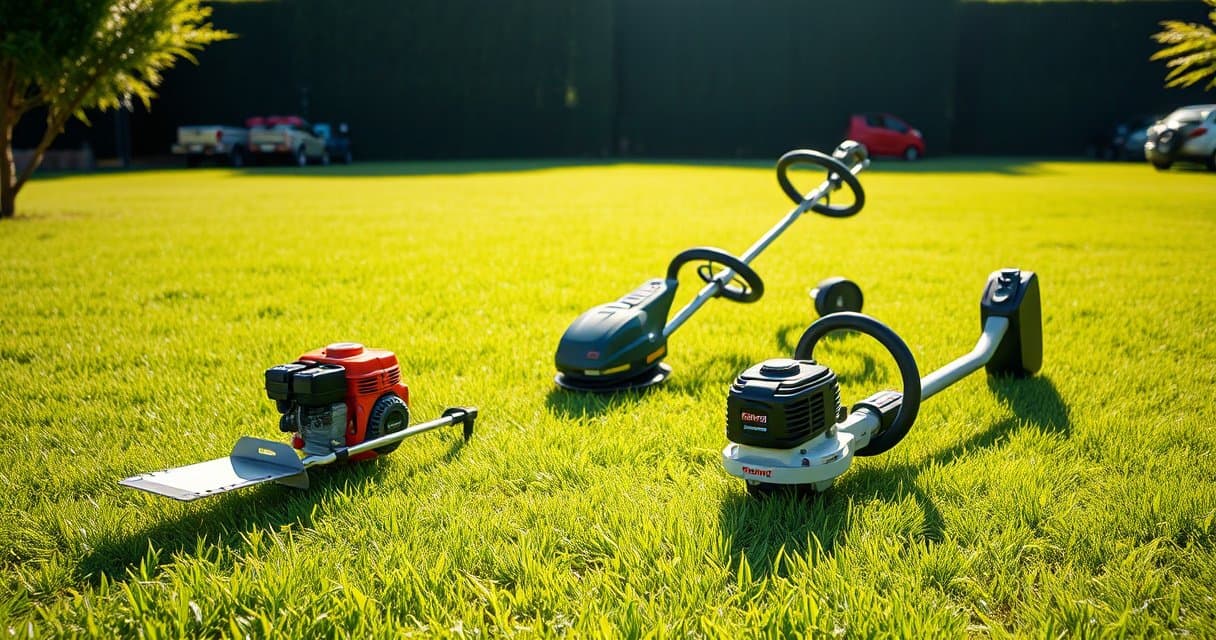
Budget is often the deciding factor. But spending less than €150 can quickly become a false economy if the machine breaks down after two seasons. The idea is to find the best balance between your actual needs, frequency of use, and your wallet. Here is an overview of what you can expect at each price point.
Under €150: For Very Small Areas and Occasional Use
At this price, you will mainly find entry-level machines, often with a low-displacement 2-stroke engine (around 22-25 cm³). This is the territory of "light clearing": cutting tall grass on a 50 m² slope, thinning out ferns. The weight is often poorly balanced, the harness basic, and anti-vibration systems are virtually non-existent. Frankly, if your need exceeds one or two uses of 30 minutes per year, look elsewhere. The frustration and fatigue will not be worth the savings. Only consider this range for a very small urban garden with soft grasses.
Between €200 and €400: The Sweet Spot for the Amateur Gardener
This is the price range where the value for money is most interesting for the majority of homeowners. For €250-300, you get a serious machine with a displacement between 28 and 32 cm³, sufficient to tackle well-established brambles. An adjustable, padded backpack harness is almost always included, which makes all the difference for comfort. You will also get very appreciable extras like a smoother starter system (e.g., EasyStart) or a cutting head with semi-automatic line feed. This is the ideal budget for a suburban garden of 1000 to 3000 m² with wild areas to contain two or three times per season.
Above €500: The Investment for Intensive Use
Here, you enter the realm of machines designed for performance and endurance. The engines are more powerful (35 cm³ and above) and, more importantly, better finished, with higher quality components for increased longevity. Vibrations are very well absorbed, and the weight is often better distributed for more agile handling during sessions lasting several hours. This range is justified if you have a large plot (over 5000 m²) heavily overgrown with dense brush, or if you use the tool weekly. This is also where you will find multifunction models that accept interchangeable heads (hedge trimmer, brush cutter), a real asset if you have multiple maintenance needs.
The Hidden Cost of Equipment: Don't Forget Safety!
Your budget should not stop at the price of the machine alone. To work safely and efficiently, certain equipment is essential. Budget an additional €50 to €100 for:
- Protective glasses or a visor to protect your eyes from debris.
- A noise-cancelling helmet with integrated hearing protection (decibels rise quickly).
- Thick anti-cut gloves.
- Sturdy, high-top shoes. Do not skip on this. Your physical integrity is at stake, and working well-protected is much less tiring.
Conclusion
You are now equipped to make the right choice. Choosing your petrol brush cutter is no longer a headache.
It's above all a matter of terrain and comfort. Listen to your real needs, don't underestimate the weight and ergonomics.
Take the time to maintain it well. A well-cared-for machine will serve you for years.
Go ahead, take back control of your garden.
Frequently Asked Questions
What is the best brush cutter for rough terrain?
Choose a model with a 2-stroke engine with a displacement of 28 to 33 cm³, equipped with a good backpack harness and capable of accepting both nylon line and metal blades to handle dense vegetation.
How to choose between a 2-stroke and 4-stroke engine?
Choose a 2-stroke engine, which is lighter and more economical, for occasional and intensive use on small areas. Opt for a 4-stroke engine, which is quieter and more durable, for long and regular use on large areas.
How to winterize my gas-powered brush cutter?
Completely empty the fuel tank or add a fuel stabilizer before storing it, and thoroughly clean the cutting deck to avoid corrosion and starting problems in the spring.
Nylon line or metal blade: when to use them?
Use nylon line for tall grass, fine brambles, and terrain scattered with stones for added safety. Switch to a metal blade (toothed blade) to cut dense woody brush, old bramble thickets, and young shrub shoots.
What is the budget for a good gas-powered brush cutter?
A budget between €200 and €400 is ideal for getting a versatile and durable machine, with a displacement of around 30 cm³ and a quality backpack harness. Allow for an additional €50 to €100 for mandatory protective equipment (goggles, hearing protection, gloves).
How to reduce fatigue when using a brush cutter?
Invest in a quality backpack harness with a ball-joint suspension system to distribute the weight, and choose a model whose dry weight is suited to your strength for extended sessions.
100% free and independent — All our articles are written independently, without any sponsorship. We may earn a commission on purchases made through our links, at no extra cost to you.
Guides you might like

Ultimate Guide to Gas Mowers
Petrol lawnmowers provide power & autonomy for large lawns over 500 m². Key features & selection criteria for your garden explained.

Best Cordless Lawn Mower
Enjoy lawn care freedom: silent, instant-starting cordless mowers. Key tips on battery runtime & power selection for your perfect match.
Choosing a self-propelled lawn tractor
Choose the perfect ride-on tractor for your garden. Key tips for size, slope, and model selection to turn mowing from a chore into a pleasure.
Articles you might like
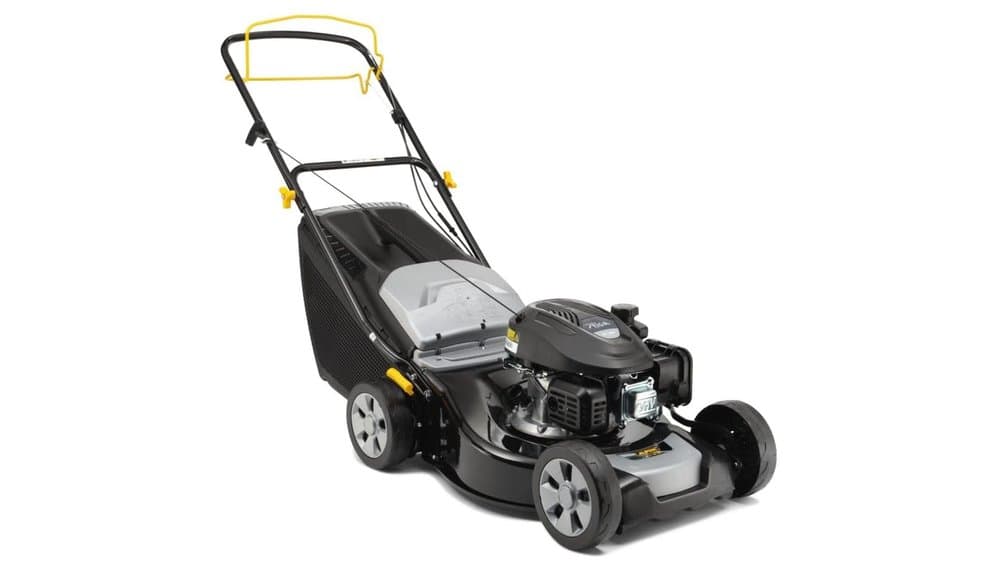
Alpina AL4 46 SA Petrol Lawnmower Review & Test
Alpina AL4 46 SA review: A robust, self-propelled petrol mower for medium to large gardens. We analyze its specs, performance, and user feedback.
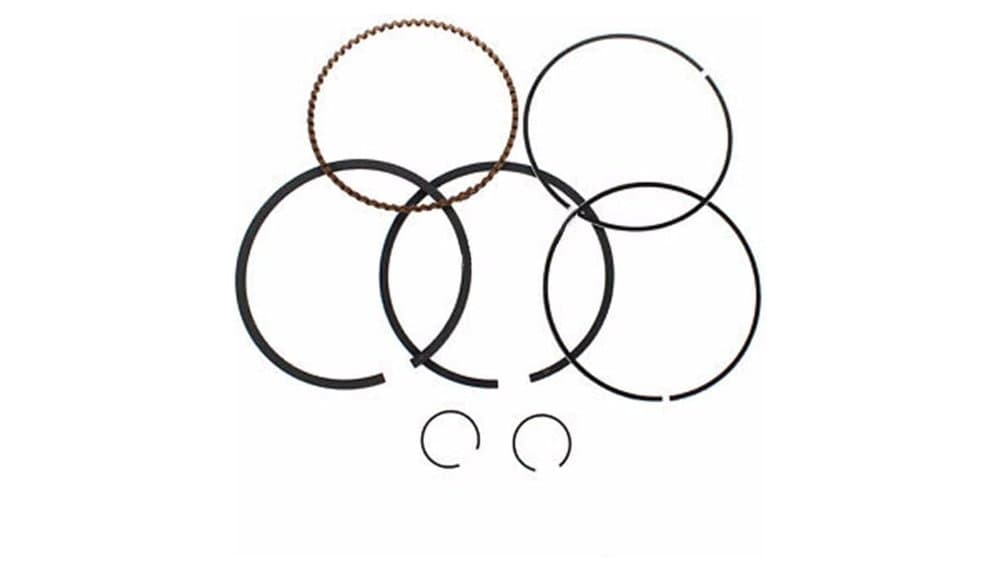
LIZONGFQ GX390 Engine Rebuild Kit Review
Restore performance: Rebuild your Honda GX390-type lawn mower engine instead of replacing the entire machine with cost-effective repair parts.
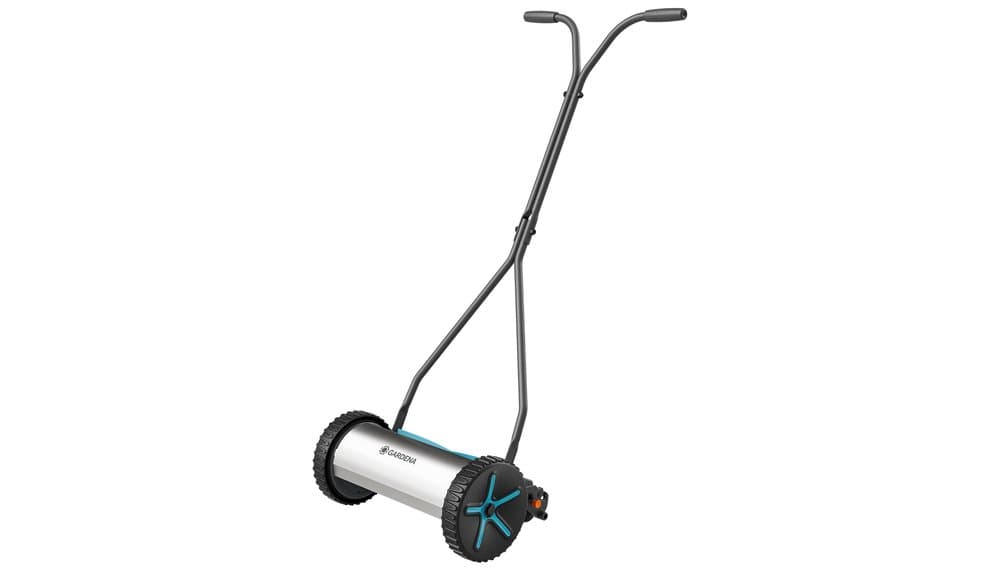
Gardena Comfort 330 Manual Lawn Mower Review and Test
No engine, no battery. This manual cylinder mower offers a quiet, eco-friendly cut for small lawns, delivering quality like an English green.