WORX Landroid Vision WR205E AI Robot Mower Review
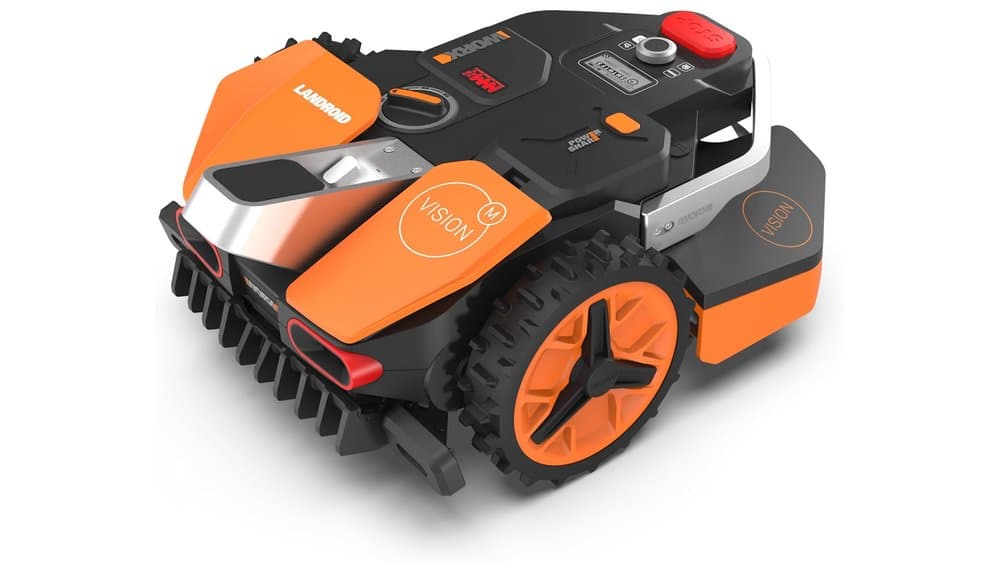
Introduction
The WORX Landroid Vision WR205E is not your average robotic lawnmower. While the market has long been dominated by models requiring tedious boundary wire installation or complex RTK systems, WORX is betting on artificial intelligence and a simple camera to revolutionize access to automated mowing. Promising installation in "30 minutes" and autonomous navigation via a 4K camera and adaptive AI, this model directly tackles the main barrier to adoption: setup complexity. But does this purely visual approach live up to all its promises in the field? That's what we will analyze in depth, breaking down its specifications, its real-world performance based on community feedback, and its relevance in your lawn care routine.
Strengths of the WORX Landroid Vision WR205E
Ultra-simplified Installation: This is the key selling point. The complete absence of a perimeter wire to bury represents a significant gain in time and effort. You place it on the lawn, configure the zones via the app, and it's theoretically ready to go.
Promising Vision and AI Navigation: The system relies on a wide-angle 4K camera coupled with a neural network designed to distinguish grass from obstacles. On paper, it avoids collisions with furniture, trees, and even pets. Its ability to climb slopes up to 30% is also notable.
Flexibility and WORX Ecosystem: It benefits from the Powershare platform, using a 20V battery interchangeable with over 200 garden and DIY tools from the brand. Multi-zone management via RFID tags (sold separately) and the integrated edge-cutting function ("Cut-to-Edge") make it a potentially very comprehensive tool.
Discretion and Autonomy: With an announced noise level of 59 dB, it is quiet enough to work early in the morning or in the evening without disturbance. Its IPX5 waterproof rating allows it to operate in the rain, ensuring maintenance regularity regardless of the weather.
Weaknesses and Limitations
Uneven Navigation Reliability: This is the main sticking point raised by users. The visual AI shows its limits under certain conditions: low-angle light (dawn, dusk), low obstacles, or objects with a color close to the grass. Erratic behaviors or collisions are sometimes reported, contradicting the promise of complete obstacle avoidance.
Imperfect Software and App Management: Many reviews criticize the responsiveness and stability of the mobile application. Bugs are mentioned, such as non-updated statuses, ignored commands (like the return-to-base order), or failed garden exploration. The LED option for night mowing is an additional paid accessory (~165€), which increases the investment.
Design and Physical Limitations: Its weight of 13.5 kg and chassis height can make it less agile in very complex gardens with many nooks and crannies. It may struggle with sudden level changes (steps over 3 cm) or narrow, winding passages.
Lack of Precise Mapping: Unlike some high-end competing robots, the Landroid Vision does not generate a precise, methodical map of your garden. Its path remains more random, which can impact mowing uniformity on very irregular terrains.
Detailed Analysis: Performance and Real-World Use
Navigation and Artificial Intelligence: The Promise vs. Reality
The heart of the WR205E's innovation lies in its wireless navigation system. According to expert tests and user feedback, this technology works well in open gardens, with clearly defined obstacles like trees or highly visible flower pots. The AI generally manages to identify and navigate around them.
However, the community notes that this intelligence has its blind spots. Low objects (like children's toys, a patio edge), a pergola with thin legs, or a shaded area creating high contrast can fool the camera. Several users report that the robot can "push" against an obstacle before finally backing up and changing direction, which is not the expected "proactive avoidance" behavior. For optimal use, clearing the lawn of small objects beforehand is still highly recommended, slightly reducing the "hassle-free" advantage.
Cutting Quality and Lawn Maintenance
From a strictly "mowing" standpoint, the Landroid Vision does its job. Its mulching system (fine cutting and deposition of grass clippings as natural fertilizer) and its 18 cm cutting width are standard for a robot in this category designed for areas up to 550 m² (600 m² max). The manually adjustable cutting height from 30 to 60 mm covers most needs, from ornamental lawns to more rustic grass.
Testers point out that to achieve an impeccable "golf green" result, you need to be patient. The robot works through frequent and random passes. After a few weeks of regular use, the lawn thickens and evens out. However, some note that during on-the-spot turning maneuvers, the wheels can sometimes mark the ground, especially during dry periods or on soft soil.
Ease of Use and Mobile Application
The WORX app is the primary interface for scheduling mowing, managing zones (via separately purchased RFID tags), and receiving notifications. When it works well, it is considered intuitive. The possibility of updating the firmware over-the-air (OTA) is a real plus for improving the AI and fixing bugs over time.
But customer opinions are very divided on its reliability. Issues with latency (the robot's status is not updated in real time), disconnections, or unexecuted commands are frequently mentioned. This can generate frustration, especially when you want to intervene remotely. The initial garden exploration ("training") is also a sometimes finicky step, depending on the terrain configuration.
For What Type of Garden?
The WORX Landroid Vision WR205E finds its ideal playground in small to medium-sized gardens (up to 500-550 m²), with a relatively simple shape, and already well physically delineated. A lawn in a single piece, with clear borders (walls, slabs, raised beds) and distinct obstacles, is the perfect scenario.
Conversely, based on feedback, it will be less comfortable in gardens fragmented into several small areas connected by narrow passages, featuring many corners, protruding tree roots, or very rugged terrain. Gravel paths or non-grassy areas must be clearly identifiable by the camera, or the robot may venture into them.
Technical Specifications
| Feature | Detail |
|---|---|
| Model | WORX Landroid Vision WR205E |
| Recommended Area | 550 m² (Max 600 m²) |
| Navigation | 4K Camera + Adaptive AI (Wireless, no cable) |
| Cutting Width | 18 cm |
| Cutting Height | 30 - 60 mm (manual adjustment) |
| Cutting Type | Mulching (fine cut) |
| Multi-zone Management | Yes, via RFID tags (accessories) |
| "Edge-Cutting" Function | Yes (Cut-to-Edge) |
| Maximum Slope | 30% (approx. 16-17°) |
| Battery | Powershare 20V/2Ah Lithium-Ion (interchangeable) |
| Autonomy | Adaptive (automatic return to base for charging) |
| Noise Level | 59 dB |
| Waterproof Rating | IPX5 (Rain resistant) |
| Connectivity | WORX App (Wi-Fi, Bluetooth) |
| Updates | OTA (Over-The-Air) |
| Dimensions (L x W x H) | 62.6 x 26.5 x 46 cm |
| Weight | 13.5 kg |
| Garage | Optional accessory |
| Night LED | Optional accessory |
| Warranty | Manufacturer's warranty (2+1 years under registration conditions) |
What Users and Testers Say
A synthesis of 8,445 customer reviews (average rating of 3.8/5) and expert web analyses reveals a two-tier user experience.
The Satisfied (mostly 4 and 5-star ratings) highlight the freedom from the mowing chore. They appreciate the ease of setup ("Received today and already working after about half an hour"), the quiet operation, and the overall result on the lawn ("Our lawn is always impeccable"). For them, the robot fulfills its basic contract: mow regularly without physical intervention.
The Frustrated (1 and 2-star ratings) focus their criticism on the failures of the navigation system and the application. A detailed review summarizes these grievances: "The robot has no intelligence... it gets stuck, tries to push walls, the app doesn't update the status...". The gap between the marketing promise of omnipotent AI and the reality of sometimes erratic behavior is the main source of disappointment, especially given the investment.
Expert testers agree on this point: the Landroid Vision is revolutionary in its concept (elimination of the wire) but perfectible in its execution. They confirm its effectiveness on simple terrains, but also note its vulnerability to changing light conditions and its need for a "prepared" environment to be completely reliable. Navigation remains less methodical and predictable than on a perfectly installed wire-guided robot.
Conclusion: A Vision of the Future, Still Coming into Focus
The WORX Landroid Vision WR205E is not a traditional robotic lawnmower. It is a pioneer in mainstream visual navigation, deliberately sacrificing the absolute, predictable reliability of a perimeter wire for installation of disarming simplicity.
Its main asset is undeniably its wireless deployment, which will appeal to everyone put off by the idea of spending hours burying a cable. For a medium-sized garden (around 500 m²), well-defined, and relatively open, it constitutes a valid and liberating solution, especially if complemented by the WORX Powershare tool ecosystem.
However, its main weakness lies in the current shortcomings of its artificial intelligence. It is not yet mature enough to handle all the complex scenarios of a real garden with the same infallibility as a physical system. The user experience will therefore depend heavily on your terrain's configuration and your tolerance for occasionally having to reposition the robot or clear a path.
In summary, the Landroid Vision is an innovative and practical option for "clean" and standard gardens, offering a very concrete glimpse into the future of robotic mowing. But for very complex, tortuous, or cluttered terrains, perimeter wire models or high-precision RTK navigation robots remain, to date, more predictable and reassuring choices. It represents a bet on the future – a bet that already pays off for many, but not yet for everyone.
100% free and independent — All our articles are written independently, without any sponsorship. We may earn a commission on purchases made through our links, at no extra cost to you.
Articles you might like
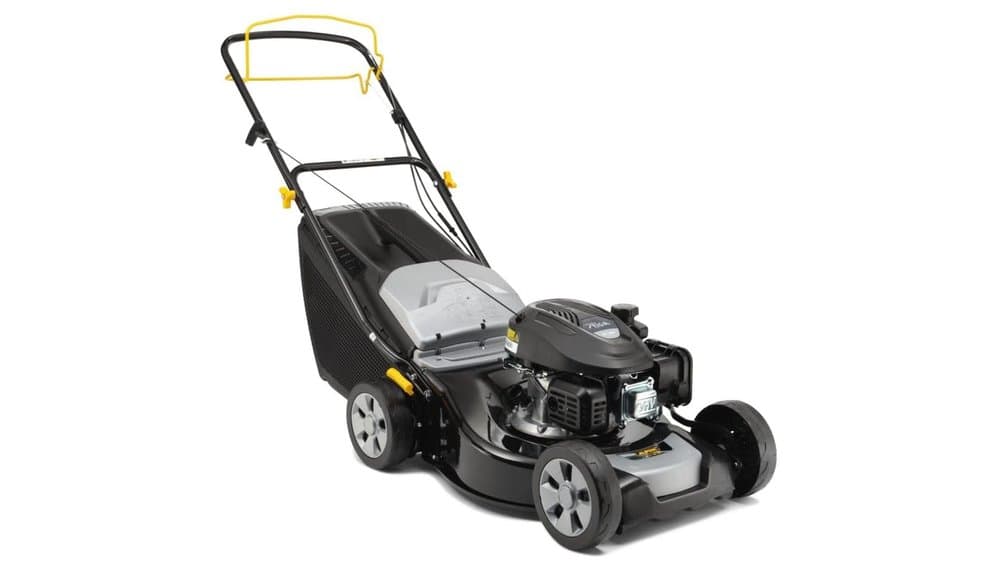
Alpina AL4 46 SA Petrol Lawnmower Review & Test
Alpina AL4 46 SA review: A robust, self-propelled petrol mower for medium to large gardens. We analyze its specs, performance, and user feedback.
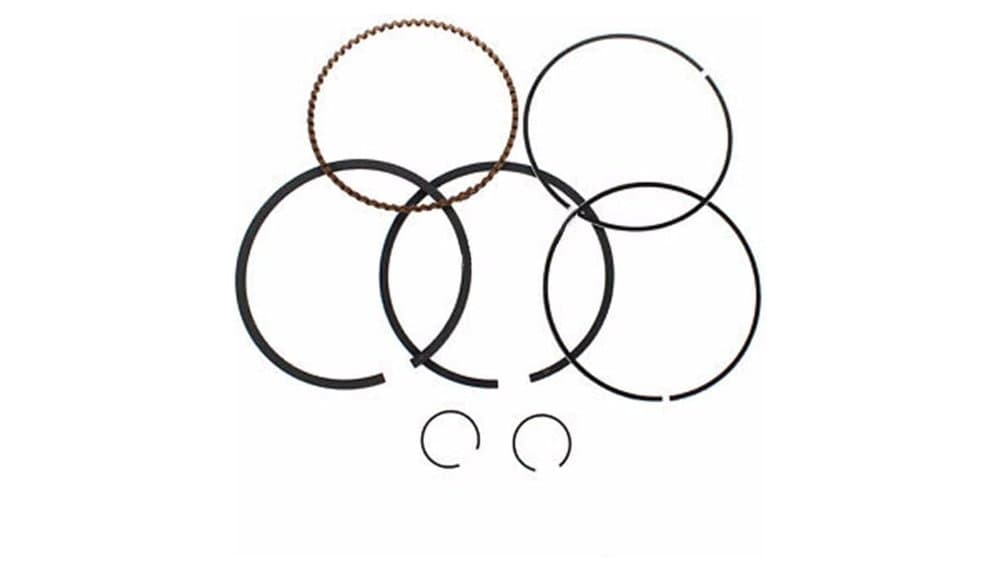
LIZONGFQ GX390 Engine Rebuild Kit Review
Restore performance: Rebuild your Honda GX390-type lawn mower engine instead of replacing the entire machine with cost-effective repair parts.
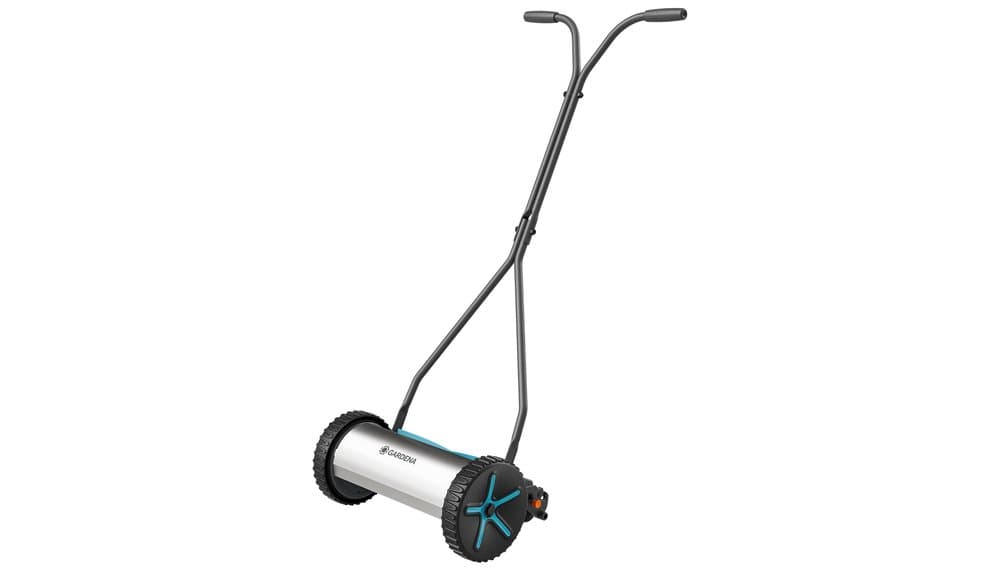
Gardena Comfort 330 Manual Lawn Mower Review and Test
No engine, no battery. This manual cylinder mower offers a quiet, eco-friendly cut for small lawns, delivering quality like an English green.
Guides you might like

Ultimate Guide to Gas Mowers
Petrol lawnmowers provide power & autonomy for large lawns over 500 m². Key features & selection criteria for your garden explained.
Buying Guide: Choosing Your Thermal Brushcutter
Guide to choosing a thermal brushcutter: Compare 2-stroke vs. 4-stroke engines and harness types for effective clearing of brambles and sloped terrain.

Wireless robotic lawn mower guide
Choose the perfect cordless robotic lawn mower. Learn to match battery life, cutting width, and your garden's layout for a flawless, hands-free lawn.