YARDCARE V100 Robot Lawn Mower Review & Test
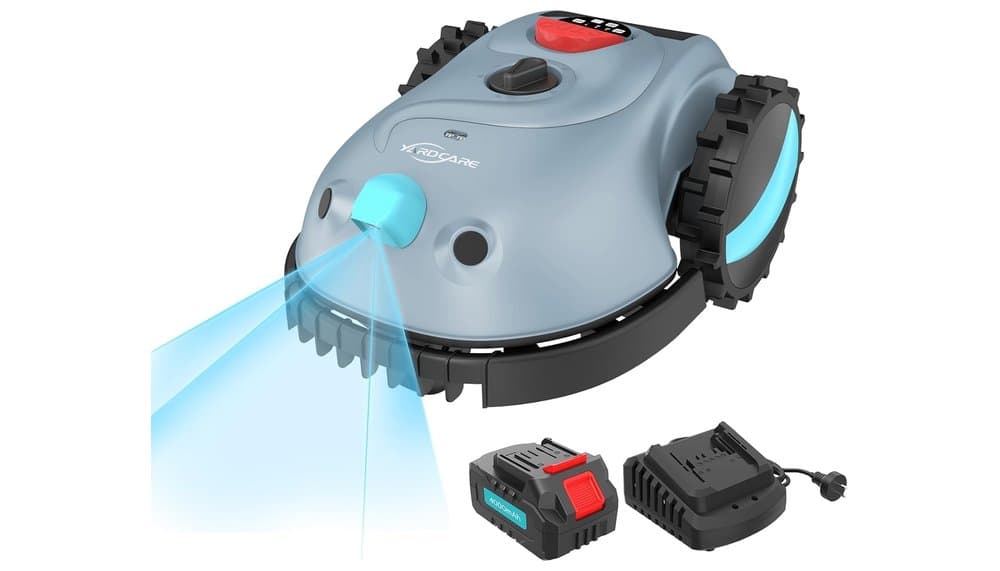
Comprehensive Analysis of the YARDCARE V100 Robot Mower: Autonomy Through Vision
In the rapidly expanding world of robot mowers, the wireless model that requires no tedious installation has become the holy grail for many garden owners. The YARDCARE V100 positions itself precisely in this promising niche, promising total freedom through its visual navigation. But does this promise of absolute autonomy hold up against the realities of a garden? We have analyzed the technical specifications, community feedback, and market trends to provide you with a clear picture of this robot.
Strengths: Intelligence Serving Simplicity
The advantages of the V100 are based on three main pillars: minimalist installation, intelligent navigation, and a practical design.
Zero-wire installation: This is the key selling point. Unlike the majority of robots that require burying a boundary wire to define the work area, the V100 simply needs to be placed on the lawn. This eliminates hours of tedious work and makes the robot perfectly suited for rentals or gardens where one does not wish to alter the structure.
Advanced visual navigation: The robot uses a camera and computer vision algorithms to "understand" its environment. According to specifications and user feedback, it can distinguish grassy areas from non-grassy surfaces (paths, terraces) and identify up to 150 different types of obstacles, from trees to children's toys left on the lawn. This approach makes it very flexible.
Integrated safety and maintenance: The design has clearly integrated user concerns. A physical emergency stop is present, and tilt sensors immediately stop the blades if the robot is lifted. The rain sensor is also a major asset, protecting both the robot and the lawn by stopping work in bad weather. On the maintenance side, the inclusion of replacement blades (3 mounted + 3 extras) and a removable 4 Ah battery facilitates upkeep and extends lifespan.
Weaknesses: The Limits of a Consumer-Focused Approach
Despite its innovations, the V100 presents compromises inherent to its price category and its "plug-and-play" philosophy.
Limited cutting width: With a cutting width of only 16 cm, the V100 is clearly aimed at small spaces. This characteristic can significantly extend mowing time on even medium-sized surfaces, making it less competitive compared to often wider boundary wire robots.
Dependence on light conditions: Navigation based on a camera implies a dependence on light. As confirmed by manufacturer information, the robot cannot function at night and may encounter difficulties in very overcast weather. This is an operational constraint to consider.
Modest slope capacity: Advertised to handle slopes up to 20% (approximately 11.5°), it is suitable for relatively flat or slightly rolling terrains, but will struggle on gardens with pronounced relief.
Untreated border zone: For safety reasons and to limit the risk of damage, the robot reportedly stops 10-20 cm from the edge of the lawn. A small strip of grass will therefore need to be cut manually, a detail that testers highlight as something to anticipate.
Detailed Analysis: Who is this robot for?
Cutting Performance and Garden Management
The V100 is equipped with a rotary blade cutting system (mulching type), which finely chops the grass and redeposits it on the lawn as natural fertilizer. Its cutting height is adjustable from 20 to 60 mm, a standard range covering most needs, from short grass to a more natural look. The brushless motor promises a longer lifespan and quieter operation than a brushed motor.
Regarding navigation, user feedback is glowing about its ability to avoid obstacles and cover the area systematically, either in a spiral or by following a "U" pattern. It excels in small to medium-sized gardens (up to approximately 400-500 m² depending on the layout) where its maneuverability is an asset. For large surfaces, its narrow cutting width becomes a handicap.
Ease of Use and Reliability
The promise of simplicity is kept: quick startup, no complex area programming via an app (the robot seems to handle this autonomously). The removable battery is a real plus for recharging and potentially for its replacement over time. The safety devices (stop on lift, emergency button, rain sensor) inspire confidence, especially for families with children or pets.
The build quality, judged as solid by users, and the presence of spare parts in the box are positive points for longevity. However, the lack of clear information about the warranty and long-term availability of spare parts remains a common grey area for many emerging brands.
Technical Specifications
| Feature | Detail |
|---|---|
| Type | Wireless robot mower, visual navigation |
| Navigation | Smart camera, obstacle avoidance (150 types) |
| Installation | No boundary wire needed |
| Motor | Brushless motor |
| Battery | Lithium-ion 4 Ah (removable) |
| Cutting Width | 16 cm |
| Cutting Height | Adjustable from 20 to 60 mm |
| Max. Slope | 20% (approximately 11.5°) |
| Safety Functions | Stop on lift, emergency button, rain sensor |
| Weight | 9.56 kg |
| Dimensions (L x W x H) | 58.6 x 45.6 x 31.6 cm |
| Special Features | Blades included (3 mounted + 3 spare) |
What Users Say
Customer feedback, mostly very positive (average rating 4.9/5), converges on several strengths and a few limitations.
The praise mainly focuses on:
- The simplicity of installation: "Placed, turned on, it goes." Users appreciate not having to bury a wire.
- The efficiency of navigation: The robot correctly avoids obstacles (toys, borders, trees) and covers the assigned area well.
- The quality of cut: The lawn is described as uniform, well-maintained, with a clean cut.
- Time savings and peace of mind: "It does the job by itself," "it frees up time."
The points of caution or criticism noted concern:
- Border management: As anticipated, an unmowed strip of 10-20 cm requires manual finishing.
- Adaptation to tall grass: The manufacturer itself indicates it is not designed for grass above 65 mm. An initial manual mowing is recommended in this case.
- Garden size: Several reviews specify it is ideal for a "small garden" or a "small lawn," confirming its orientation.
No recurring reliability issues or failures were reported in the analyzed reviews, which is an encouraging sign for the initial robustness of the product.
Conclusion: An Intelligent Robot for Small Urban Gardens
The YARDCARE V100 Robot Mower is not a universal solution, but it perfectly fulfills a very specific mission: to bring mowing automation to owners of small to medium-sized gardens (up to 400-500 m²) who refuse the installation complexity of a boundary wire robot.
Its embedded intelligence, capable of mapping and avoiding obstacles autonomously, is its main asset. Coupled with truly simple installation and comprehensive safety devices, it makes for a very convincing product for its target audience.
However, we must highlight its limits: the narrow cutting width and limited slope capacity confine it to flat or slightly sloping terrains of modest size. Its daytime-only operation is also a constraint to consider.
Final Verdict: If you are looking for a "turnkey" solution, without installation work, for a reasonably sized urban garden with simple relief, the YARDCARE V100 represents a pertinent and effective technological choice. On the other hand, for large surfaces, rugged terrains, or those requiring a perfect edge cut right up to the border, traditional boundary wire robot mowers or higher-end RTK models will likely remain more suitable. The V100 proves that visual navigation is a viable alternative to the wire, provided one accepts its natural area of operation.
100% free and independent — All our articles are written independently, without any sponsorship. We may earn a commission on purchases made through our links, at no extra cost to you.
Articles you might like
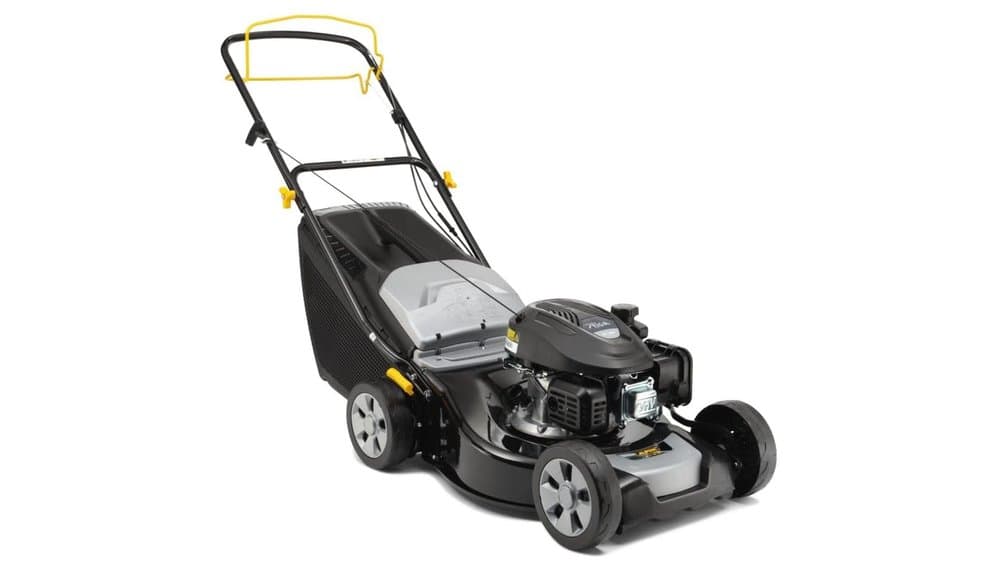
Alpina AL4 46 SA Petrol Lawnmower Review & Test
Alpina AL4 46 SA review: A robust, self-propelled petrol mower for medium to large gardens. We analyze its specs, performance, and user feedback.
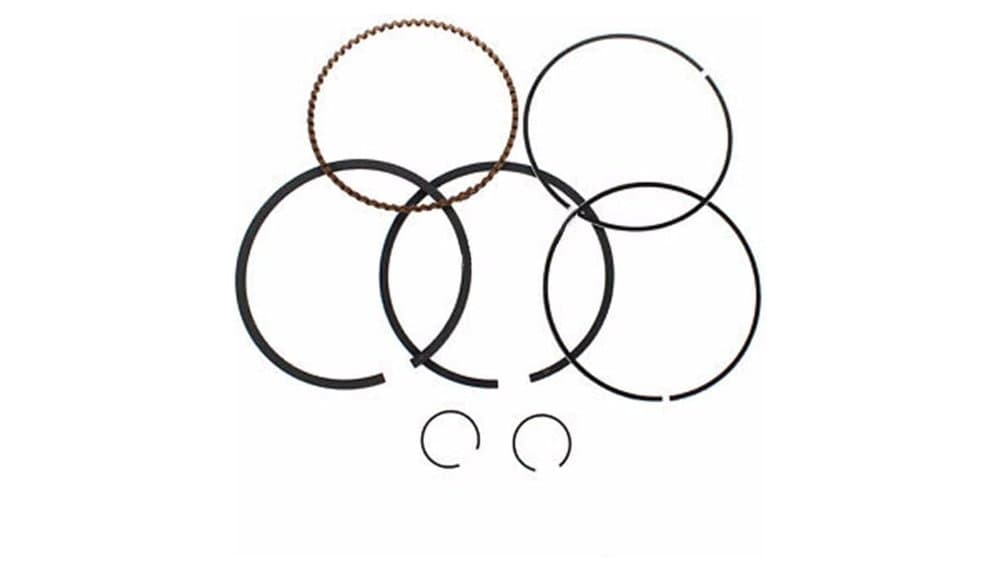
LIZONGFQ GX390 Engine Rebuild Kit Review
Restore performance: Rebuild your Honda GX390-type lawn mower engine instead of replacing the entire machine with cost-effective repair parts.
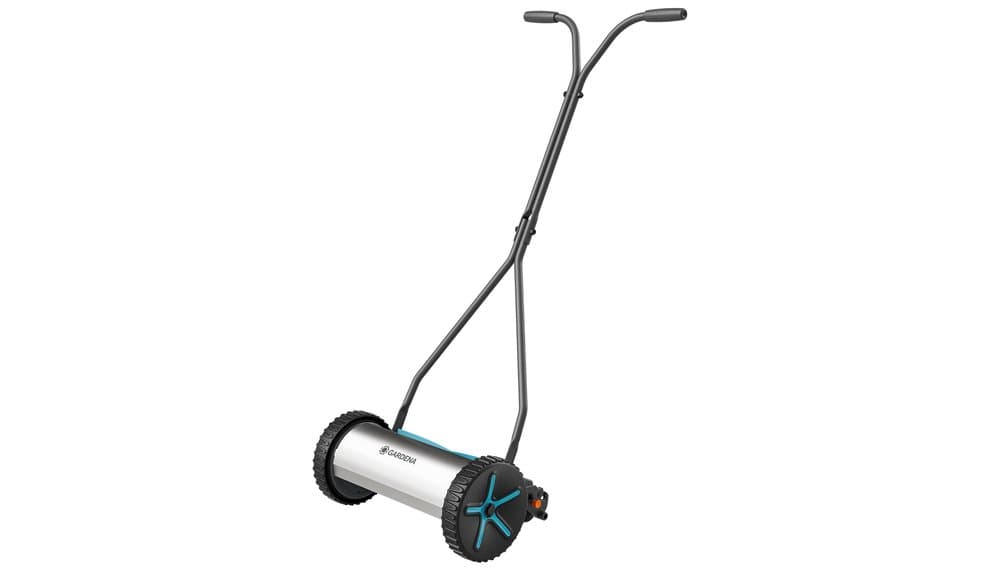
Gardena Comfort 330 Manual Lawn Mower Review and Test
No engine, no battery. This manual cylinder mower offers a quiet, eco-friendly cut for small lawns, delivering quality like an English green.
Guides you might like

Ultimate Guide to Gas Mowers
Petrol lawnmowers provide power & autonomy for large lawns over 500 m². Key features & selection criteria for your garden explained.
Buying Guide: Choosing Your Thermal Brushcutter
Guide to choosing a thermal brushcutter: Compare 2-stroke vs. 4-stroke engines and harness types for effective clearing of brambles and sloped terrain.

Wireless robotic lawn mower guide
Choose the perfect cordless robotic lawn mower. Learn to match battery life, cutting width, and your garden's layout for a flawless, hands-free lawn.